
Picking a Rain Shower Faucet Set for international projects? Honestly, it takes way more than comparing photos and bargain prices. You’ve got to look at water pressure, connection standards, materials, finish quality, and what happens after the sale. That shiny chrome set might look great online, but after a few months of cleaning, scratches can start showing up. Yeah, the little details really do matter.
This guide looks at practical options from brands like Kohler, Hansgrohe, and Delta, plus qualified manufacturers that serve hospitality and residential markets. But reliability isn’t just a brand name. It comes down to measurable stuff: brass or stainless-steel construction, ceramic cartridges, thermostatic control accuracy, and documented flow performance. Independent testing reports, warranty terms, installation manuals, and replacement-part availability should back up any serious buying decision. And don’t forget local plumbing rules. A model that works in a European bathroom might not fit an Australian or North American install without an adapter.
Real installation experience often shows the gap between a nice-looking spec and dependable daily use. A wide overhead spray can feel luxurious, sure, but it may struggle when water pressure is weak. Hand showers need flexible hoses, brackets that actually hold, and controls you can still use with wet hands. These small choices add up.
So this overview compares top Rain Shower Faucet Set options from a global buyer’s point of view. It focuses on comfort, durability, maintenance, supplier credibility, and total ownership cost. Some recommendations will still be imperfect, because no single product fits every climate, budget, or plumbing system. That limitation is worth talking about, not hiding. In the end, reliable sourcing starts with careful questions, verified documents, and realistic expectations.
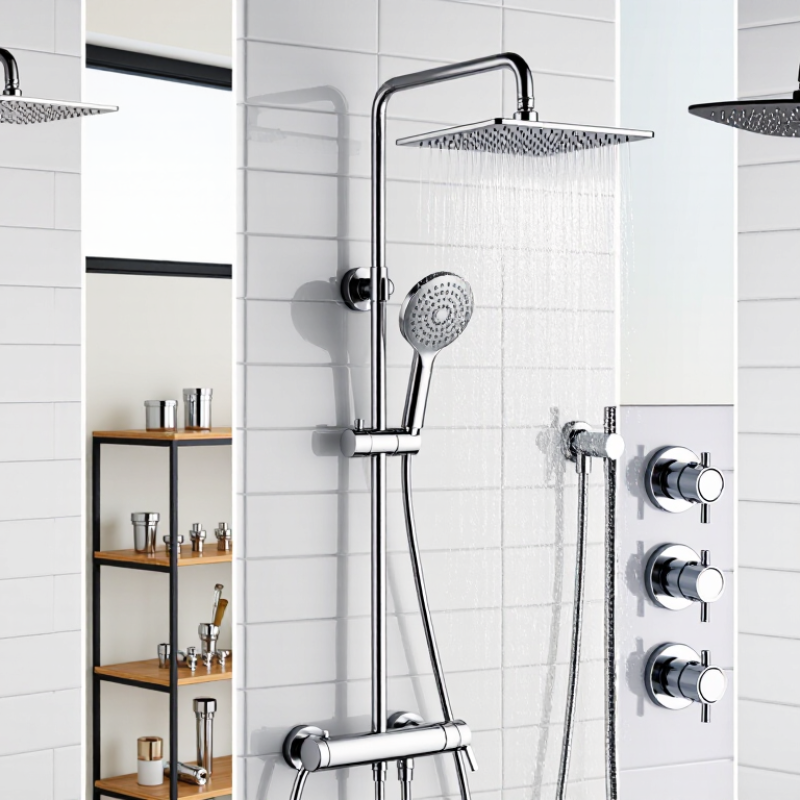
A top rain shower faucet set balances comfort, safety, durability, and water efficiency. It should deliver an even spray across the shoulders, without wasting excessive water. The U.S. EPA WaterSense specification limits certified showerheads to 2.0 gallons per minute, compared with the older 2.5-gallon standard. EPA estimates that an average household can save about 2,700 gallons annually by using efficient showerheads.
Control quality matters just as much as spray size. A reliable thermostatic valve helps maintain stable temperature when another tap opens. Anti-scald protection is essential, especially in family bathrooms. Look for corrosion-resistant metal, ceramic cartridges, replaceable seals, and accessible spare parts. Thread sizes, pressure requirements, and certification rules differ between markets. Check them carefully. A large overhead plate cannot fix weak water pressure. I have seen impressive-looking sets perform poorly because installers ignored pipe capacity. The perfect set does not exist.
Tips: Match the showerhead to local pressure and water hardness. Choose a handheld sprayer for easier cleaning and accessibility. Verify the inlet size before purchase, since metric and imperial fittings may not match. The International Code Council’s International Plumbing Code also emphasizes temperature control and scald prevention. These details often matter more than polished finishes. A top set should feel quiet, stable, and predictable after months of daily use.
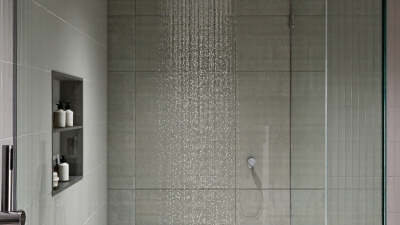
Choosing a Rain Shower Set requires more than checking its appearance. Global buyers should compare flow rate, water pressure needs, and spray coverage. A wide overhead plate can feel luxurious, but it may perform poorly in homes with low pressure. Check the technical sheet carefully. Look for measured litres per minute, inlet size, and operating pressure ranges. These details matter more than polished photographs.
Material quality also deserves close attention. Solid brass or certified stainless steel usually offers better durability than thin plated components. Compare the coating against local water conditions, especially in hard-water regions. Silicone nozzles make mineral cleaning easier. A thermostatic valve can help maintain stable temperature during pressure changes. Test the control movement if possible. It should feel firm, not loose. I once focused too heavily on spray size and overlooked the wall connection depth. That mistake made installation awkward.
International compatibility can become complicated. Confirm thread standards, mounting dimensions, and included adapters before ordering. Ask whether replacement cartridges and seals are available in your market. Clear installation instructions reduce errors, although some manuals remain surprisingly vague. Look for independent testing, material declarations, warranty terms, and responsive technical support. Verify local plumbing requirements before purchase. A reliable supplier should provide measurable specifications, not only claims such as “premium” or “spa-like.” Small details often decide whether the shower feels dependable after months of daily use.
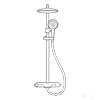
Rain shower faucet sets differ mainly by installation, control, and spray function. Wall-mounted sets suit standard renovations because existing plumbing often needs fewer changes. Ceiling-mounted sets create a wider, softer rainfall pattern, but they need stronger structural planning and careful drainage. Dual-function sets combine an overhead shower with a handheld wand. They are practical for rinsing children, cleaning the enclosure, or washing long hair.
The 2024 Houzz U.S. Bathroom Trends Study reported continued homeowner investment in upgraded shower systems, reflecting demand for comfort and flexible controls. However, survey preferences do not guarantee suitability in every market. Water pressure matters. A wide 300-millimeter head may feel weak in a low-pressure apartment. Thermostatic sets provide more stable temperature control, while pressure-balancing valves are usually simpler and less costly. Digital controls can improve precision, but they add electronic parts that may require qualified servicing.
Water use deserves closer attention. The U.S. EPA WaterSense program limits certified showerheads to 2.0 gallons per minute, about 20% below the federal maximum. This benchmark is useful, although buyers must check local requirements and plumbing standards. The UN World Water Development Report 2024 also highlights growing water stress worldwide. A smaller head with well-designed nozzles can feel surprisingly effective. I would not judge performance by head size alone. Product testing should include spray coverage, temperature recovery, cartridge quality, and replacement-part availability. Some listings still hide these details. That is a reliability problem for global buyers.
A reliable Rain Shower Head Set begins with its core material. Solid brass offers weight, stable threads, and good resistance to temperature changes. Stainless steel performs well in humid bathrooms, especially when its grade is clearly disclosed. ABS plastic is lighter and usually more affordable, but thin housings can feel less substantial. Material labels alone are not enough. Ask for test records and warranty terms.
Finish affects maintenance as much as appearance. PVD finishes generally resist scratching better than simple decorative coatings. Chrome remains practical because its smooth surface exposes water spots quickly. Brushed finishes hide fingerprints, yet hard-water deposits may still collect around the nozzles. The U.S. Environmental Protection Agency’s WaterSense program limits certified showerheads to 2.0 gallons per minute. It estimates savings of about 2,700 gallons of water per household annually. The U.S. Department of Energy also reports that water heating uses roughly 18% of home energy, making flow performance worth checking.
Tips: Choose silicone nozzles for easier cleaning. Confirm the flow rate before importing. Compare corrosion testing, not only photographs. A polished finish can look premium but age poorly in mineral-heavy water. I would also inspect thread accuracy and replacement-part availability. These details are easy to overlook, and that is where durability decisions become less certain.
How to read this chart: Higher tensile strength generally indicates better resistance to mechanical deformation, but long-term faucet durability also depends on alloy quality, wall thickness, casting quality, seals, and installation.
Finish guidance: PVD finishes are commonly selected for improved scratch and color resistance, while chrome plating offers a bright, easy-to-clean surface. Brushed finishes can help reduce the visibility of water spots and minor scratches. Buyers should verify coating compliance with applicable requirements such as ISO 1456.
Reference values: 304 stainless steel minimum tensile strength is 515 MPa under ASTM A240/A240M; C37700 brass minimum tensile strength is approximately 345 MPa under common ASTM B124/B124M specifications; ABS values are typical material-property values reported using ASTM D638 test methods. Actual performance varies by grade, processing, and product design.
Choosing a Rain Head Shower Set for global markets requires more than checking finish and spray size. Water pressure varies between apartments, hotels, and rural homes. The U.S. EPA WaterSense specification limits showerheads to 2.0 gallons per minute, or 7.6 litres, while maintaining tested performance. That benchmark suits water-conscious buyers, but some low-pressure homes may need air-injection technology or a smaller head. Bigger is not always better.
Regional plumbing standards also matter. The WHO and UNICEF Joint Monitoring Programme reported that 2.2 billion people lacked safely managed drinking water in 2022. This makes efficient flow control a practical selling point, not just a design feature. For European projects, check metric connections, thermostatic requirements, and local conformity documents. For North American projects, confirm NPT compatibility and flow labeling. In hard-water regions, silicone nozzles and easy-clean surfaces can reduce maintenance. A polished finish may look attractive, yet it can show mineral spots quickly.
Tips: Test the set with a pressure gauge and a bucket. Measure litres collected in one minute. Ask local installers about spare cartridges and connection sizes. Review certification records, not only catalogue claims. A useful field test can expose weaknesses. Still, no checklist is perfect; user expectations about spray softness and water force differ sharply between markets. Quote performance at stated pressure, and leave room for installation conditions.
| Set Profile | Typical Configuration | Rain Shower Head | Recommended Flow Range | Suitable Water Pressure | Connection Considerations | Best-Fit Markets | Key Buying and Compliance Checks |
|---|---|---|---|---|---|---|---|
| Compact Water-Saving Set | Rain shower, hand shower, single-function diverter, exposed or concealed mixer | 200–250 mm round or square head | 5.7–7.6 L/min (1.5–2.0 gal/min) |
1.5–5 bar Best performance around 2–3 bar |
Verify local pipe thread, normally 1/2 inch for shower outlets; confirm hot and cold inlet spacing |
Urban apartments North America Water-stressed regions |
Choose a tested flow restrictor and pressure-compensating aerator. For the United States, verify the applicable maximum showerhead flow requirement for the intended state and product category. |
| Standard Family Shower Set | 250–300 mm rain shower, multi-function hand shower, thermostatic mixer and adjustable slide bar | 250–300 mm | 7.6–9.5 L/min (2.0–2.5 gal/min) |
1.5–5 bar Recommended minimum: 2 bar |
Check mixer inlet spacing, wall bracket position, hose length and compatibility with existing plumbing |
Europe Middle East Southeast Asia |
Thermostatic safety control is useful for family bathrooms. Confirm temperature-limit settings, anti-scald performance, cartridge availability and installation instructions in the destination language. |
| Low-Pressure Performance Set | Large rain shower, hand shower, pressure-balancing or thermostatic valve, wide spray nozzles | 250–300 mm with optimized spray channels | 6.0–8.5 L/min (1.6–2.2 gal/min) |
0.5–3 bar Designed for low-pressure systems |
Confirm minimum operating pressure, pipe diameter, diverter capacity and suitability for gravity-fed systems |
Older housing High-rise buildings Gravity-fed installations |
Look for spray-face geometry that maintains coverage at lower pressure. Avoid oversized heads with high water demand unless a booster pump is available. |
| High-Flow Luxury Set | 300–400 mm rain shower, separate hand shower, 2- or 3-way diverter, thermostatic valve | 300–400 mm | 9.5–15 L/min (2.5–4.0 gal/min) |
2–5 bar Recommended minimum: 2.5 bar |
Check supply-pipe capacity, hot-water recovery, valve flow rating and ceiling or wall reinforcement |
Luxury residences Hotels Premium renovation projects |
Confirm that the building can supply the required flow at the desired temperature. Energy and water-use rules may limit the permitted flow, especially in regulated or hospitality projects. |
| Hand-Shower-Focused Set | 200–250 mm rain shower, adjustable hand shower, slide rail and flexible hose | 200–250 mm | 5.7–8.5 L/min (1.5–2.2 gal/min) |
1–5 bar | Confirm hose length, rail fixing points, hand-shower holder adjustment and 1/2-inch hose compatibility |
Family bathrooms Accessible bathrooms Rental properties |
Prioritize easy reach, secure mounting and smooth height adjustment. For accessible installations, verify mounting height and user requirements on the project specification. |
| Hard-Water Resistant Set | Rain shower, hand shower, thermostatic mixer, silicone spray nozzles and easy-clean cartridge | 200–300 mm | 6.0–9.5 L/min (1.6–2.5 gal/min) |
1.5–5 bar | Check filter screens, removable check valves, replacement cartridge dimensions and cleaning access |
Hard-water areas Southern Europe Parts of Asia and the Middle East |
Use flexible silicone nozzles and accessible inlet filters. Ask for scale-resistance test information, cleaning instructions and spare-parts availability. |
| Cold-Climate Thermostatic Set | Rain shower, hand shower, thermostatic bar or concealed valve with anti-scald stop | 200–300 mm | 6.0–9.5 L/min (1.6–2.5 gal/min) |
1.5–5 bar | Confirm hot-water supply stability, non-return valves, inlet orientation and insulation requirements |
Northern Europe Canada Cold-climate housing |
Check temperature stability when pressure changes. A thermostatic valve should have a clear safety stop, suitable hot-water temperature range and documented installation orientation. |
| Australia and New Zealand Efficiency Set | Rain shower, hand shower, efficient mixer and flow-controlled outlets | 200–250 mm | 5.7–7.5 L/min (1.5–2.0 gal/min) |
1.5–5 bar | Confirm local inlet dimensions, water-pressure conditions and product registration requirements before sale |
Australia New Zealand Water-efficiency projects |
Products sold in Australia may require water-efficiency registration and labeling under the applicable WELS rules. Verify the current rating, testing route and documentation for the exact configuration. |
| Hotel and Project Specification Set | 300 mm rain shower, hand shower, concealed thermostatic valve, service stops and replaceable cartridges | 250–300 mm | 7.6–12 L/min (2.0–3.2 gal/min) |
2–5 bar | Confirm rough-in depth, access panel requirements, valve serviceability, pressure-loss data and spare-parts schedule |
Hotels Serviced apartments Commercial developments |
Prioritize standardized rough-in dimensions, documented flow and pressure data, cleaning access, warranty terms, replacement parts and installation support for multiple rooms. |
| Brushed-Metal Coastal Set | Rain shower, hand shower, thermostatic or pressure-balancing mixer, corrosion-resistant surface | 200–300 mm | 6.0–9.5 L/min (1.6–2.5 gal/min) |
1.5–5 bar | Confirm substrate, coating process, salt-spray performance and compatibility with local cleaning chemicals |
Coastal housing Resorts Humid climates |
Request finish durability and corrosion-test evidence. Avoid harsh chloride-based cleaners and specify routine rinsing where salt exposure is high. |
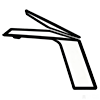
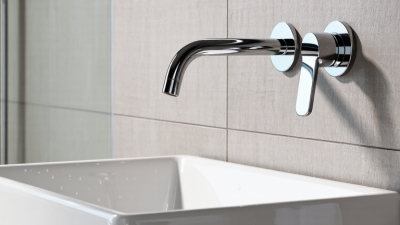
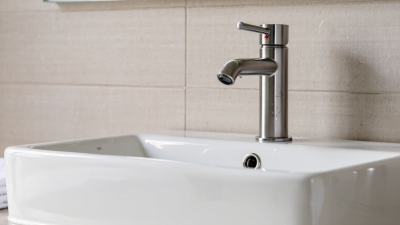
A bathroom faucet can transform an ordinary sink into a more refined and comfortable part of the daily routine. Designed with clean lines and a contemporary profile, this faucet brings a stylish upgrade to modern bathrooms without overwhelming the surrounding décor. Its smooth handle movement allows users to adjust water temperature and flow with ease, while the balanced spout design supports convenient handwashing, grooming, and cleaning.
Performance is equally important. According to the U.S. Environmental Protection Agency’s WaterSense specifications, efficient bathroom faucets use no more than 1.5 gallons per minute, helping reduce water consumption by at least 30% compared with standard models while maintaining practical flow performance. This faucet is designed with an efficient outlet and a steady stream, helping limit splashing and improve everyday usability. A durable metal construction and corrosion-resistant finish also support long-term reliability in a humid bathroom environment.
The streamlined surface is easy to wipe clean, making routine maintenance less demanding and helping preserve its polished appearance over time. Compatible with many contemporary sink styles, the faucet offers a practical balance of visual appeal, user comfort, and lasting performance for renovations, guest bathrooms, and daily family use.
It should provide even spray coverage, stable temperature, quiet operation, and durable materials. Predictable performance matters more than a polished finish.
Choose a showerhead rated near 2.0 gallons per minute, or 7.6 litres. Efficient flow can save thousands of gallons yearly.
A large overhead plate may perform poorly with weak pressure. Check the operating range before choosing a wider showerhead.
Choose thermostatic temperature control and anti-scald protection. These features help prevent sudden temperature changes when another tap opens.
Solid brass or certified stainless steel generally outlast thin plated parts. Ceramic cartridges, replaceable seals, and spare parts also matter.
Confirm thread standards, inlet size, mounting depth, and included adapters. Metric and imperial fittings may not match.
Yes. It helps with cleaning, bathing children, and accessibility. It also adds flexibility beside the overhead shower.
Use a pressure gauge and collect water in a bucket for one minute. Compare the measured flow with the stated specification.
Look for silicone nozzles and easy-clean surfaces. Mineral spots may still appear, especially on dark polished finishes.
No. Water pressure, pipe capacity, fitting standards, and user preferences vary widely. My earlier focus on spray size caused installation problems.
Choosing a top Rain Shower Faucet Set requires more than comparing appearance or price. Global buyers should evaluate water flow performance, spray functions, temperature control, valve quality, and ease of installation. Common options include exposed and concealed systems, thermostatic and pressure-balanced models, as well as sets with handheld showers or adjustable overhead sprays. These configurations should match user preferences, bathroom layouts, and local plumbing conditions.
Material and finish also play an important role in long-term durability. Corrosion-resistant metal, reliable ceramic cartridges, and protective surface treatments can help the set perform well in different climates. Buyers should confirm water pressure requirements, connection standards, mounting dimensions, and compatibility with regional plumbing systems before purchasing. The best choice may vary by market: some regions prioritize water efficiency, others require stronger flow, easier maintenance, or enhanced temperature safety. A successful selection balances design, performance, durability, installation convenience, and local consumer expectations.