Picking out the perfect wall-mounted basin faucet in 2026 is about more than just matching a fancy finish to your bathroom tiles. Honestly, you need to think about whether it fits your basin, the wall setup, water pressure, and even how you use your space every day. A faucet might look gorgeous, but if it splashes everywhere or feels weird under a shallow basin, it’s not really worth it. Sometimes, those small details really matter—don’t overlook them.
This guide walks you through things like spout reach, installation height, quality of the cartridge, how smooth the handle moves, and how easy it is to clean around. We also talk about the material, especially brass, how well it resists corrosion, flow performance, and availability of replacement parts. Plus, experienced plumbers usually double-check your rough-in measurements before telling you what to buy—that little step can save you from big, costly wall repairs later on.
Make sure to look for clear technical drawings and tested performance data too. Reputable manufacturers should be upfront about what materials they use, their warranty, and how to keep everything in tip-top shape. While online reviews can be helpful, don’t forget—they might miss some real-world installation issues. Let’s be honest, real bathrooms aren’t always as tidy as those showroom pics. Hard water can leave marks, kids might pull at the handles, and towels brushing against the faucet happen all the time.
In the end, a good choice balances good looks, reliability, and ease of maintenance. It’s not just about grabbing the cheapest or the most expensive model out there. This guide highlights what features to look for in modern bathrooms, whether you’re renovating or squeezing a sink into a small space. It also points out common mistakes, like picking a spout that's too short or mounting the faucet too low—things to avoid.
Keep in mind, as technology and water-saving standards evolve, some recommendations might change. That’s totally normal. Product specs can vary depending on where you buy, the brand, or even the batch it was made in. So, always double-check the latest details before you make your purchase. If you measure carefully and compare evidence-based info, your wall-mounted basin faucet should deliver the right flow, comfortable use, and dependable performance for years to come.
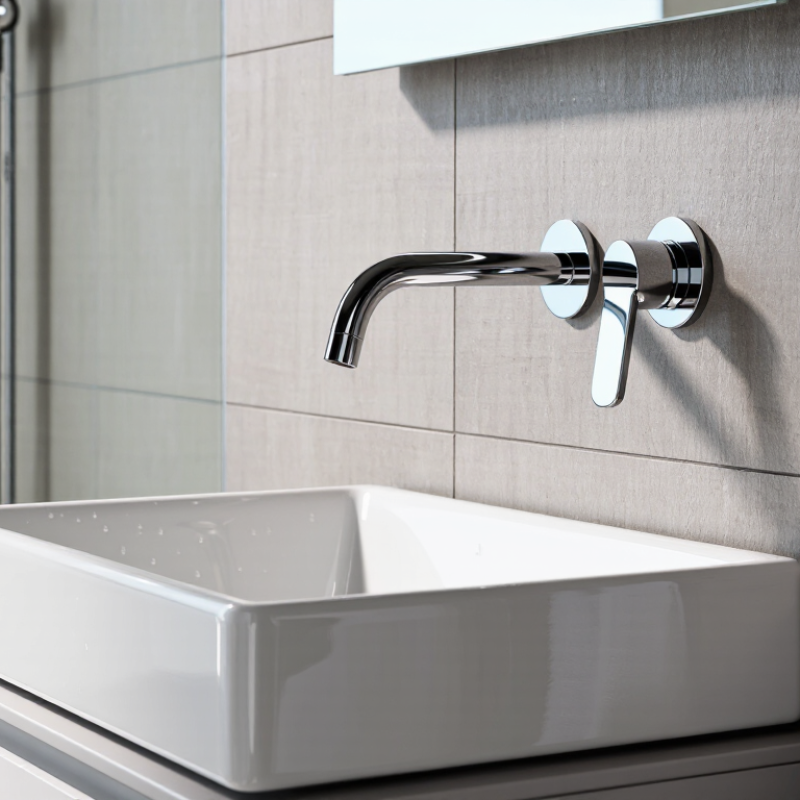
Define Wall-Mounted Basin Faucets and Their Key Components
A wall-mounted basin faucet is a tap fixed to the bathroom wall instead of the basin deck. Its water outlet extends over the bowl, leaving the basin surface clear and easier to wipe. This layout can create a clean, spacious appearance, but it depends on accurate wall preparation. The rough-in depth must match the faucet body and finished wall thickness.
The main components are the spout, valve cartridge, handles, wall plate, aerator, and internal supply connections. The spout controls reach and water direction. A short spout may splash, while an overly long one can crowd the basin. The cartridge regulates temperature and flow. Ceramic cartridges are commonly selected for smooth movement and steady control. Single-lever and dual-handle designs feel different in daily use. Try the motion before choosing.
The wall plate covers the opening and helps protect the finished surface. Supply lines carry hot and cold water behind the wall, so qualified installation matters. A removable aerator can simplify cleaning when mineral deposits appear. That detail matters. Check the basin’s centerline, faucet height, and water pressure together. In real bathroom projects, small measurement errors can cause large inconvenience. I would not choose by appearance alone. A beautiful faucet can still feel awkward if the water lands near the basin edge. Seal quality, finish durability, and access for future repairs also deserve attention. Some plans look perfect on paper, yet the user’s hand position may feel uncomfortable.
Check Basin Compatibility, Spout Reach, and Required Clearance
Choosing a wall-mounted basin faucet starts with the basin, not the finish. Measure the basin’s tap landing area, overflow position, and inner slope. The spout should discharge near the drain, without striking the rear wall or basin rim. A practical target is 100–150 mm of spout reach, but vessel basins may need more. Small errors create annoying splash.
Required clearance deserves equal attention. Leave enough space above the basin for hand washing and below the spout for cleaning. Check the wall cavity before installation; supply pipes, blocking, and valve depth must match the faucet body. The U.S. EPA WaterSense specification limits qualifying bathroom faucets to 1.5 gallons per minute at 60 psi. That flow can feel weak if the basin is unusually deep or the aerator is restrictive.
Industry guidance also supports careful user testing. The National Kitchen & Bath Association’s 2024 Bathroom Design Trends research identifies improved functionality as a major renovation priority. That sounds obvious, yet many buyers still choose by appearance first. Hold a paper template against the wall and simulate the handle movement. I once underestimated backsplash thickness by only 12 mm; the handle then felt cramped. Recheck finished wall thickness, basin compatibility, and cleaning access before drilling. A beautiful faucet cannot fix poor reach.
How to Choose the Best Wall Mounted Basin Faucet in 2026? — Check Basin Compatibility, Spout Reach, and Required Clearance
| Basin Type |
Typical Basin Dimensions |
Suggested Spout Reach |
Typical Spout Height Above Rim |
Clearance to Check |
Compatibility Notes |
| Compact wall-hung basin |
Width: 400–500 mm
Front-to-back: 300–400 mm |
120–160 mm |
100–150 mm |
Check that the handle clears the basin edge and any side wall or mirror cabinet. |
Measure from the finished wall to the drain area. A shorter reach can help reduce splashing in a shallow basin. |
| Standard inset or countertop basin |
Width: 500–650 mm
Front-to-back: 400–500 mm |
150–200 mm |
120–180 mm |
Allow room to operate the handle comfortably and keep the outlet above the rim. |
Position the water stream over the bowl, not the rear deck or outer rim. Confirm the basin’s actual interior dimensions. |
| Deep countertop basin |
Width: 550–700 mm
Front-to-back: 450–550 mm |
170–220 mm |
100–160 mm |
Check the faucet body and handle against the basin’s raised edge and nearby backsplash. |
A deep bowl may allow a lower outlet position. Choose reach based on the drain location and the bowl’s usable interior. |
| Vessel basin |
Width: 400–600 mm
Front-to-back: 350–500 mm |
160–220 mm |
Typically 50–100 mm above the basin rim |
Account for the basin’s height above the counter, faucet outlet height, and handle movement. |
Measure the installed rim height, not just the basin itself. Keep enough space for handwashing while limiting excessive drop and splash. |
| Wide double basin or large single basin |
Width: 700–1200 mm
Front-to-back: 450–550 mm |
180–240 mm, subject to bowl layout |
120–180 mm |
Check faucet position relative to bowl center, backsplash, mirror, and adjacent fixtures. |
For a double basin, verify that each faucet aligns with its own bowl. A longer reach is not automatically suitable if it places the stream near the front edge. |
| Shallow basin |
Front-to-back: approximately 300–380 mm |
Usually 120–170 mm |
Keep the outlet as low as practical while maintaining hand clearance |
Check the stream’s landing point and the distance from the outlet to the basin bottom. |
Shallow bowls are more prone to splash. Match the spout reach and outlet angle to the basin shape and water flow. |
Measuring tip: Spout reach is generally measured horizontally from the finished wall to the outlet. Before installation, confirm the faucet’s stated reach, outlet height, mounting requirements, and handle clearance against the basin’s technical drawing. Dimensions above are practical planning ranges, not universal standards.
Compare Faucet Flow Rates: WaterSense Limits Private Faucets to 1.5 gpm
Choosing a wall mounted basin faucet in 2026 starts with flow rate, not appearance. The U.S. EPA WaterSense specification limits qualifying private lavatory faucets to 1.5 gallons per minute at 60 psi. Standard models may reach 2.2 gpm, using almost 47% more water at the same pressure. That difference matters during repeated handwashing, shaving, and toothbrushing.
The Water Research Foundation’s Residential End Uses of Water, Version 2, reports faucet use at roughly 11 gallons per person each day. A lower-flow faucet can reduce waste, but pressure still affects comfort. In a real bathroom, a 1.0 gpm model may feel weak when the supply line is narrow or several fixtures operate together. I have found that a 1.5 gpm faucet often offers a better balance. The lowest number is not always the best choice.
Tips: Check the faucet’s certified flow rate at 60 psi, then inspect your home’s water pressure. Match the spout reach to the basin. A short spout can splash the rear wall, while excessive reach sends water beyond the drain. Choose an aerated outlet for a softer stream and cleaner basin surface. Look for durable cartridges and accessible shutoff valves. Product testing can appear perfect in a showroom, yet daily performance may differ. Review independent certification records and installation guidance before purchase.
How to Choose a Wall-Mounted Basin Faucet in 2026
Compare the rated flow rate with the WaterSense benchmark for private bathroom faucets.
WaterSense-labeled private bathroom sink faucets are limited to 1.5 gallons per minute (gpm), compared with the 2.2 gpm federal maximum. Check the product’s rated flow and installation requirements when selecting a faucet. Source: U.S. EPA WaterSense and U.S. Department of Energy.
Verify Plumbing Standards: ASME A112.18.1/CSA B125.1 Certification
Choosing a wall mounted basin faucet in 2026 requires more than matching the finish to your bathroom. Verify compliance with ASME A112.18.1/CSA B125.1. This standard covers plumbing supply fittings, including pressure performance, flow control, endurance, and mechanical strength. Look for a permanent certification mark, not only “tested to” wording. Ask the supplier for the current certificate and scope of approval.
The U.S. Environmental Protection Agency reports that faucets represent about 15% of indoor household water use. WaterSense-labeled bathroom faucets use no more than 1.5 gallons per minute, compared with the federal standard of 2.2 gallons. That difference matters at a busy basin. However, certification does not guarantee a comfortable installation. Check the faucet’s inlet size, connection type, wall depth, and required rough-in dimensions before ordering.
1.5 gallons per minute
WaterSense-labeled bathroom faucets
I once focused too heavily on appearance. The mounting plate did not align with the existing pipework, creating unnecessary rework. A qualified plumber should inspect the wall structure and shutoff access. They should also confirm local plumbing requirements, because regional rules may be stricter than the product standard. Choose a model with clear installation instructions, traceable test documentation, and replaceable cartridges.
Small details matter. When documentation is vague, pause before purchase. Reliability is easier to verify on paper than repair after the wall is closed.
Evaluate Installation Access, Cartridge Serviceability, and Warranty Terms
How to Choose the Best Wall Mounted Basin Faucet in 2026?
Installation access should guide your choice before appearance.
A wall-mounted basin faucet may require opening the wall, moving pipes, or adjusting the rough-in depth. Check whether the valve can be reached from the front. A removable trim plate helps when replacing seals or cartridges. Rear access is useful during construction, but awkward after tiling.
The U.S. Environmental Protection Agency states that WaterSense bathroom faucets use no more than 1.5 gallons per minute, at least 30% less than standard models. Lower flow is valuable, but poor pressure can make handwashing unpleasant. Test both factors.
Cartridge serviceability matters more than polished packaging.
Choose a ceramic cartridge with accessible retaining nuts and commonly available replacement parts. Ask whether the cartridge can be changed without removing wall tiles.
EPA research reports that household leaks waste nearly 10,000 gallons of water annually, so a slow drip deserves prompt attention. Warranty terms need similar scrutiny. Read the coverage period for the cartridge, finish, and labor separately. Confirm installation errors, mineral buildup, and replacement shipping exclusions.
I once treated a long warranty as proof of quality. That was a mistake.
Tips:
- Photograph pipe locations before closing the wall.
- Keep the cartridge code with your maintenance records.
- Request the installation drawing.
- Check water pressure at the basin.
- Do not assume every service part remains available.
A five-year warranty may sound reassuring, yet a short-lived cartridge can still create expensive tile work.
Conclusion
Choosing the best Wall Mounted Basin Faucet in 2026 starts with understanding its main components, including the spout, handles, cartridge, mounting plate, and water connections. Before purchasing, confirm that the faucet matches your basin’s tap-hole arrangement and depth. Measure the spout reach carefully to ensure water lands near the center of the basin, while allowing enough clearance for hand washing and backsplash protection. Flow rate is also important: WaterSense limits private lavatory faucets to 1.5 gallons per minute, helping balance water efficiency with comfortable performance.
For long-term reliability, look for products made from corrosion-resistant materials with finishes that are easy to clean and maintain. Verify compliance with recognized plumbing standards, especially ASME A112.18.1/CSA B125.1 certification. Installation access should be considered in advance, since concealed connections may require precise wall preparation. A serviceable cartridge can simplify future repairs, while clear warranty terms provide additional confidence. By evaluating compatibility, performance, materials, maintenance, and support together, you can select a faucet that is practical, durable, and well suited to your bathroom.

 Patented Designs
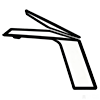 Patented Bathroom Faucets
 Patented Kitchen Faucets
 Completed Series Collection
 Shower Faucets
 Bathroom Accessories
 kitchen Series
 Filter kitchen Faucet
 Silicone kitchen Faucets
 Spring Loaded kitchen Faucets