A Rain Shower Faucet Set can totally transform your shower, making it feel more calming and giving you that sense of spaciousness. But, honestly, just looking at how it looks isn’t enough to know if it’ll work well in your bathroom. For example, a big overhead spray might feel super luxurious, but it could end up using more water than you'd like and might not perform as well if your home's water pressure isn’t great. Before you start comparing finishes, it’s smart to take some measurements—know your shower space, check the ceiling height, and see where your existing pipe and controls are situated. Even a few inches of difference can really change how comfortable you feel under the shower. Small details, you know, they really do matter.
In this guide, I’ll walk you through some key things to keep in mind—like spray coverage, water pressure, valve compatibility, the materials used, how complicated installation might be, what kind of maintenance is involved, and overall value. When you’re comparing options, look for clear specs—know the diameter of the showerhead, connection size, and what water pressure range it’s recommended for. These details are way more reliable than just looking at pretty pictures or promotional claims. If you’re going for a finish like brushed nickel, it’ll hide water spots better than a shiny, polished surface—though keep in mind, it still needs regular cleaning. And if you’re replacing existing hardware, double-check whether the new controls match your current valve because sometimes upgrading actually means more work than just swapping out a fixture. Plus, don’t forget personal preferences! Some folks love a really powerful spray, but others might find it uncomfortable. Bottom line—there’s no one-size-fits-all set. Use these tips to help narrow down your choices, ask the right questions, and pick a shower set that really fits your space and how you like to shower every day.
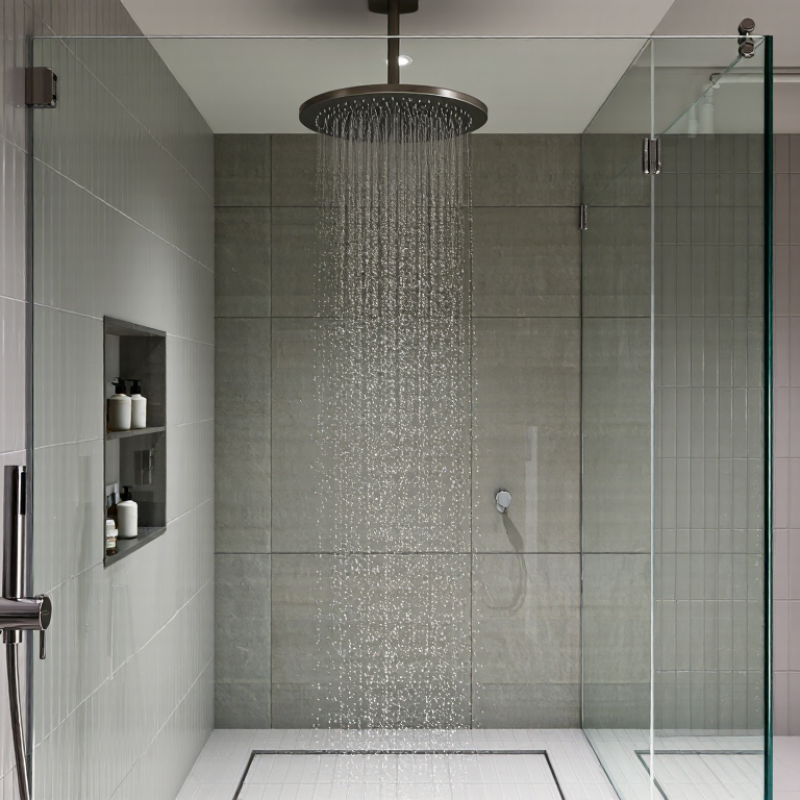
Measure Spray Coverage and Ceiling Clearance Before Choosing a Rain Showerhead
A rain showerhead should fit the person and the room, not just look generous in a product photo. Measure from the finished floor to the ceiling, then compare that clearance with the user’s height and the shower arm’s drop. Leave enough space to install and clean the head. Measure twice. A common planning miss is forgetting that tile, a raised shower base, or a ceiling slope can change the usable height.
Check spray coverage before choosing the head diameter. Use painter’s tape to mark the proposed spray area on the floor, then stand inside it and check whether your shoulders and torso would be covered. A larger head does not guarantee even coverage; water pressure and spray design matter too. The U.S. EPA’s WaterSense showerhead specification sets a maximum flow rate of 2.0 gallons per minute, compared with the federal standard of 2.5 gallons per minute. That is useful context, but it does not predict coverage in your bathroom. If possible, test a similar spray pattern in person. Even careful measurements can miss how the spray feels once installed. That part is frustrating, and worth considering.
Compare Flow at 80 psi: U.S. Federal Showerhead Limit Is 2.5 GPM
When comparing rain shower faucet sets, check the flow rate at 80 psi. The U.S. federal showerhead standard is generally 2.5 gallons per minute at that test pressure. Treat it as a comparison point, not a promise about your shower. Home water pressure can be lower, and pipe condition matters.
Read the specification carefully. Does the listed rate apply to the rain head alone, or to another included outlet? Check whether the set lets you run two outlets at once; their combined flow may differ. If you can, test your own pressure or time a bucket fill. A simple check helps. It is not laboratory testing, but it can expose a mismatch between the label and your experience.
Then consider the spray pattern and controls, not just the number. A broad, gentle spray may feel satisfying at modest flow, while a narrow spray can feel sharper. Try the diverter with wet hands, if possible. Look for clear instructions and accessible replacement parts, too. One honest caveat: I would not choose by flow alone. A set can meet the benchmark and still feel underwhelming in a low-pressure home. Check local requirements, since rules may vary.
Rain Shower Flow Rates at 80 psi
Compare the U.S. federal showerhead maximum with the EPA WaterSense maximum.
What this means: A WaterSense-labeled showerhead uses no more than 2.0 gallons per minute at 80 psi, compared with the federal maximum of 2.5 gallons per minute. When choosing a rain shower set, compare flow rates measured at the same pressure; the feel of the spray can also depend on the showerhead design and your home’s water pressure.
Sources: U.S. Department of Energy and U.S. EPA WaterSense.
Choose Efficient Flow: EPA WaterSense-Labeled Models Max Out at 2.0 GPM
A rain shower can feel generous without using excessive water. In the United States, EPA WaterSense-labeled showerheads are independently certified to use no more than 2.0 gallons per minute. That limit can help reduce hot-water use, though actual savings depend on shower habits and household plumbing. Check the certification on the product packaging or documentation; appearance alone tells you nothing about flow.
Flow rate is only part of comfort. A broad, soft spray may feel relaxing, while a narrower pattern can seem stronger at the same rate. Look for adjustable spray settings and read the manufacturer’s flow information before choosing a set. If possible, try a similar showerhead in person. Small details matter. Also consider whether your home has adequate water pressure, since a low-flow model may feel underwhelming in a system with weak pressure. I once assumed a larger shower face would feel more powerful; it mostly spread the water over a wider area. That may not suit everyone. Compare the stated flow with your current showerhead, and weigh water efficiency against the spray experience you actually want.
Estimate Savings: EPA Reports 2,700 Gallons Saved per Family Each Year
A rain shower can feel generous without wasting water, but the head’s size alone tells you little. The U.S. Environmental Protection Agency’s WaterSense program estimates that a family can save 2,700 gallons of water each year by replacing older showerheads with WaterSense-labeled models. These showerheads use no more than 2.0 gallons per minute and must meet spray-performance requirements. That is meaningful. Still, the estimate is not a promise for every household; actual savings depend on shower length, household size, and the fixture being replaced.
When comparing rain shower faucet sets, check the stated flow rate and whether multiple outlets can run at once. A wide overhead spray may feel soothing, yet a high-flow setting can reduce savings quickly. Look for WaterSense certification where available, and confirm that the valve suits your home’s water pressure. The U.S. Department of Energy also notes that heating water uses energy, so shorter showers can lower both water and water-heating use. Small changes add up. An extra minute under a warm spray is easy to overlook, though. Try timing a typical shower, then choose a set that balances coverage, comfort, and a measured flow rate.
7 Tips for Choosing a Rain Shower Faucet Set - Estimate Savings: EPA Reports 2,700 Gallons Saved per Family Each Year
Use this comparison table to evaluate water use, fit, comfort, and maintenance before choosing a rain shower faucet set. Flow-rate rules and plumbing requirements can vary by location.
| Tip |
What to Compare |
Useful Benchmark or Check |
Why It Matters |
| 1 |
Water-saving certification |
Look for the EPA WaterSense label. WaterSense-labeled showerheads use no more than 2.0 gallons per minute (gpm) and meet EPA performance criteria. |
Certification offers a clear way to identify products designed to use less water while meeting performance requirements. |
| 2 |
Expected annual water savings |
EPA estimates that an average family can save 2,700 gallons of water per year by replacing older, inefficient showerheads with WaterSense-labeled models. |
Actual savings depend on household size, shower length, and the flow rate of the showerhead being replaced. |
| 3 |
Flow rate |
Compare the product’s stated gpm rating. The U.S. federal maximum for showerheads is generally 2.5 gpm; some state and local standards are stricter. |
A lower flow rate can reduce water use. Check the applicable local requirements and consider the spray performance at the stated rate. |
| 4 |
Rainhead coverage and position |
Check the published showerhead dimensions, mounting style, and recommended installation height against your shower space. |
A larger rainhead or ceiling-mounted design may need more clearance. Confirm that the spray area suits the users and the enclosure. |
| 5 |
Spray options and controls |
Review the listed spray settings and how the diverter switches between the rainhead and any handheld shower. |
Simple, clearly labeled controls make it easier to select a comfortable spray and use the shower set as intended. |
| 6 |
Valve and plumbing compatibility |
Check whether the set includes a valve, whether it is compatible with existing plumbing, and whether installation requires changes to the wall or ceiling. |
Compatibility can affect installation cost and complexity. Follow local plumbing codes and use a qualified installer when needed. |
| 7 |
Cleaning and maintenance |
Check the manufacturer’s care instructions, accessible spray nozzles, and availability of replacement parts. |
Practical cleaning and service access can help keep the showerhead working well over time. |
Sources: U.S. Environmental Protection Agency, WaterSense showerheads; U.S. Department of Energy, water heating and water-use information. Savings are EPA estimates and will vary by household and existing showerhead.
Match Temperature Controls to ASSE 1016 Valve Requirements
When choosing a rain shower set, check the valve behind the trim—not just the handle style. ASSE 1016 covers individual shower and tub-shower valves designed to control water temperature and pressure. Look for documentation showing that the actual valve meets the applicable standard; a matching-looking trim kit alone does not establish compliance.
The distinction matters. A pressure-balancing valve responds to changes in supply pressure, while a thermostatic valve senses water temperature. Combination valves use both approaches. Choose the type that suits your plumbing and household needs.
Check compatibility before buying. Confirm the trim is designed for the valve body, and ask a qualified installer to verify the valve’s listing and local code requirements. Set the temperature limit stop according to the manufacturer’s instructions and applicable rules. It helps reduce scald risk, but it does not replace a properly selected valve. Test the shower after installation: run the rain head, then briefly use another fixture and notice whether the temperature shifts. Small changes can reveal a real issue. I’ve found product descriptions can make this detail easy to miss, so keep the valve paperwork and verify the exact model before the wall is closed.
Verify Fixture Certification to ASME A112.18.1/CSA B125.1
A rain shower set should feel solid, but appearance cannot confirm safe performance. Check the product documentation for certification to ASME A112.18.1/CSA B125.1, a standard covering plumbing supply fittings. Look for the exact model number in the certifier’s public directory, not just a general statement on the package. Certification details can vary by component. I still check twice; attractive packaging can distract.
Tip: Match model numbers. Confirm the showerhead, valve, and trim are included in the certification scope. Ask the seller for the certifier’s name and listing. A vague “meets standards” claim is not the same as verifiable certification. Keep a photo of the label and receipt. Paperwork matters.
Also compare flow-rate information. The U.S. EPA WaterSense showerhead specification sets a maximum flow of 2.0 gallons per minute, at least 20% below the federal standard showerhead limit of 2.5 gallons per minute. That figure applies to WaterSense-labeled showerheads, not every rain set. A wider spray can feel different even at lower flow. Check the product’s tested flow rate and whether the listed certification applies to the complete set. It is easy to assume one mark covers everything. Don’t.
Check Shower Arm, Valve, and Water-Pressure Compatibility Before Installation
Before choosing a rain shower faucet set, measure the existing shower arm and note how it connects to the wall.
A large overhead head can look compatible but still need a different arm length or angle. Check the product’s fitting requirements against your existing setup; thread sizes and connection styles are not always interchangeable. A small mismatch can cause leaks or leave the shower head awkwardly close to the wall.
Check the valve, too.
The trim and valve must be designed to work together, and some sets require a specific valve that may not be included. If you cannot identify the valve behind the wall, look for its markings or ask a qualified plumber before ordering. Guessing is expensive. Also confirm whether the set supports your preferred controls, such as separate temperature and flow adjustments.
Water pressure matters.
A broad rain head may feel weak if the home’s supply pressure or available flow is limited. Check the faucet set’s stated pressure and flow requirements, then compare them with your home’s readings or plumbing records. Measurements can be imperfect, especially in older homes, so verify uncertain details before installation. A quick compatibility check is less frustrating than opening the wall twice.
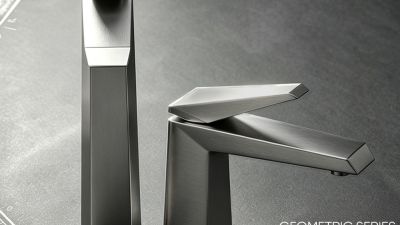
A Fresh Look at Modern Bathrooms: Why the GEOMETRY Bathroom Faucet Stands Out
A modern bathroom feels considered when every element balances visual clarity with everyday performance. The GEOMETRY Bathroom Faucet takes a shape-led approach: clean lines and defined proportions can bring a contemporary focal point to the sink without overwhelming the room. Its appeal is especially clear in bathrooms where finishes, mirrors, and lighting are kept simple, allowing the faucet’s silhouette to add character. When selecting a model, consider its height and reach as well as its finish, so it works comfortably with the basin and complements the wider design.
Practical efficiency matters, too. The U.S. Environmental Protection Agency’s WaterSense faucet specification sets a maximum flow rate of 1.5 gallons per minute, compared with the federal standard of 2.2 gallons per minute for bathroom faucets; EPA says qualifying faucets use at least 20% less water without sacrificing performance. That makes flow rate a useful specification to check when comparing contemporary designs. Pairing a well-proportioned faucet with durable materials and easy-to-clean surfaces can help create a bathroom that looks current while remaining suited to daily use.
Conclusion
Choosing a Rain Shower Faucet Set starts with checking whether the showerhead’s spray coverage suits your space and whether there is enough ceiling clearance for comfortable use. Compare flow rates using the standard 80 psi reference: the U.S. federal limit is 2.5 gallons per minute, while EPA WaterSense-labeled models use no more than 2.0 gallons per minute. Efficient flow can help reduce household water use; the EPA estimates that a family can save about 2,700 gallons each year by choosing a WaterSense-labeled showerhead.
Before buying, consider temperature control and installation requirements. Select a pressure-balancing or thermostatic valve that meets ASSE 1016 requirements, and verify that the fixture is certified to ASME A112.18.1/CSA B125.1. Finally, check that the shower arm, valve, and water pressure are compatible with the chosen set. These steps help ensure a suitable fit, reliable performance, and a more informed purchase.

 Patented Designs
 Patented Bathroom Faucets
 Patented Kitchen Faucets
 Completed Series Collection
 Shower Faucets
 Bathroom Accessories
 kitchen Series
 Filter kitchen Faucet
 Silicone kitchen Faucets
 Spring Loaded kitchen Faucets