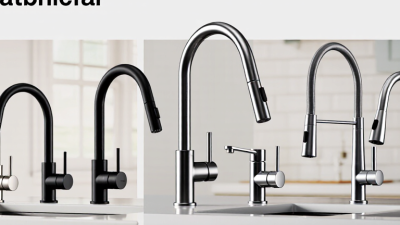

Picking the right commercial sink faucet manufacturer in China isn't just about flipping through shiny catalogs. Think about it — a busy restaurant, hospital, or hotel puts these faucets through the wringer every single day — with grease, heat, cleaning chemicals, and quick maintenance all thrown into the mix. So, the top suppliers need to prove they can keep up with all that, not just look good on paper or come with a tempting price tag.
This guide takes a look at ten well-known Chinese brands like JOMOO, Joyou, LOTA, Huayi, and Frap. We consider things like how long they’ve been in the game, the quality of their materials, how well their cartridges perform, different installation options, water efficiency, and their support for exports. When testing products, it’s crucial to check the brass quality, ensure the water flow stays steady, test handle movement, spray functionality, and see how easy it is to get replacement parts. Little details really do matter — for example, a wobbly handle can mess up the whole experience.
Michael A. Thompson, a seasoned commercial plumbing consultant, sums it up nicely: “A commercial faucet has to survive the shift, not just impress you in the showroom.” That pretty much sums up what we’re looking for. We want suppliers with transparent factories, straightforward warranty policies, quick-reacting tech teams, and solid experience catering to tough overseas markets. And don’t forget, certifications matter — because different countries and applications have their own approval standards.
Now, no list is perfect. Factory conditions can change, product lines are updated, and service levels can vary depending on where you buy from. That’s why it’s always smart to double-check current certifications, production capacity, lead times, and how samples perform before sealing the deal. The best commercial sink faucet isn’t always the cheapest or the most well-known brand. It’s the one that offers reliable water control, honest communication, and good support for parts after installation — that’s what really counts.
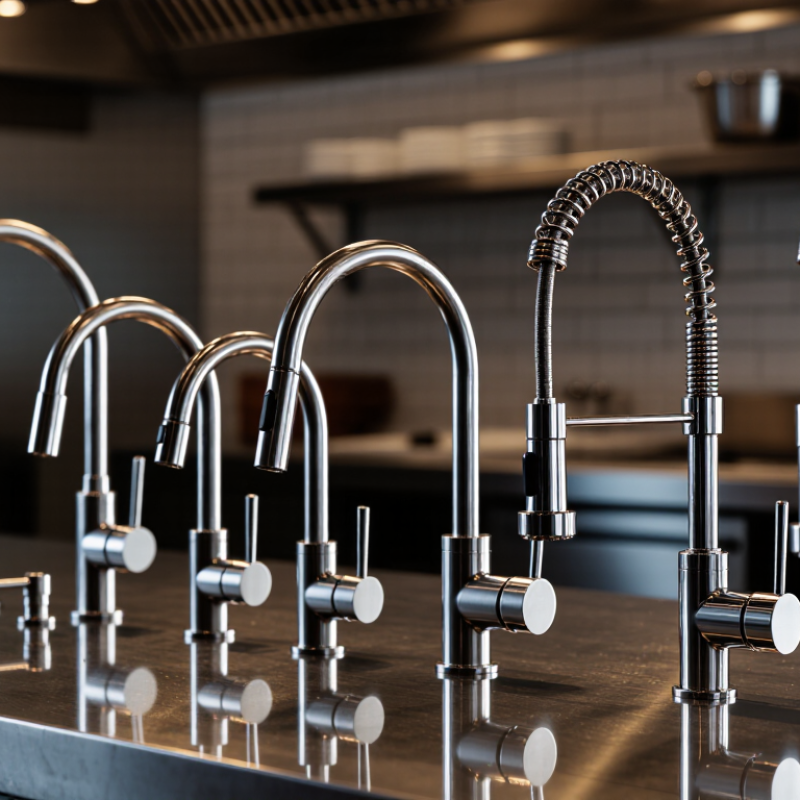
Commercial sink faucet manufacturers are defined by more than production volume or attractive catalogs. A dependable manufacturer understands food-service workflows, local water conditions, and daily cleaning routines. Its engineering team should document flow rates, pressure ranges, materials, cartridge testing, and corrosion resistance. Clear technical sheets matter. So does traceability.
Experience appears in small details. A faucet for a busy kitchen should turn smoothly after thousands of cycles, resist grease near the handle, and allow quick replacement of worn parts. Manufacturers with field experience test prototypes in working environments, not only in quiet laboratories. They also explain installation limits and maintenance schedules honestly. No product performs perfectly everywhere. That is worth admitting.
Tips: Ask for test reports, spare-part availability, warranty terms, and installation drawings before comparing the top ten manufacturers. Check whether the stated materials match the supplied sample. Request evidence of cycle testing and leak inspection. Speak with installers; their feedback often reveals loose connections, awkward access, or unclear instructions. A reliable manufacturer welcomes these questions and corrects weaknesses instead of hiding them. That response is a practical sign of professionalism.
A practical, evidence-based matrix for evaluating commercial sink faucet manufacturers without relying on company or brand names.
| No. | Evaluation Dimension | Real-World Benchmark or Fact | Recommended Verification | Importance |
|---|---|---|---|---|
| 01 | Product Compliance | A commercial faucet should be designed and tested against applicable plumbing standards, such as ASME A112.18.1/CSA B125.1 for plumbing supply fittings where applicable. | Request current test reports, certificates, and the exact product models covered by each document. | Critical |
| 02 | Lead-Free and Drinking-Water Safety | For products covered by U.S. lead-free requirements, the wetted surface materials must meet the applicable maximum weighted average lead-content requirement of 0.25%. | Check material declarations, laboratory reports, and certification records for water-contact components. | Critical |
| 03 | Material Selection | Common commercial constructions include brass, stainless steel, engineered polymers, ceramic cartridges, elastomer seals, and corrosion-resistant plated finishes. | Verify material grades, component drawings, incoming inspection records, and supplier traceability. | High |
| 04 | Pressure and Leak Testing | Factory testing should identify leaks, casting defects, loose connections, and cartridge failures before shipment. Test pressure and duration should be documented for each product family. | Review standard operating procedures, sample test records, calibration certificates, and final inspection reports. | Critical |
| 05 | Cartridge and Cycle Durability | Commercial faucets experience frequent operation. A qualified manufacturer should define cartridge cycle testing, handle-force limits, temperature conditions, and failure criteria. | Ask for durability test procedures and results instead of accepting unsupported cycle-life claims. | High |
| 06 | Flow-Rate Management | Flow rate depends on the outlet type, local code, and intended use. In the United States, WaterSense kitchen faucets use a maximum benchmark of 1.8 gallons per minute, while other commercial applications may have different requirements. | Require flow-rate data at a stated pressure, outlet configuration, and measurement method. | High |
| 07 | Corrosion and Finish Resistance | Commercial kitchens expose faucets to water, cleaning chemicals, salt, heat, and repeated handling. Finish performance should be evaluated using an applicable corrosion or coating test method. | Review coating specifications, surface-treatment records, salt-spray or equivalent test reports, and cleaning-chemical compatibility data. | High |
| 08 | Manufacturing Quality System | A documented quality system should control design changes, purchasing, production inspection, nonconforming products, corrective actions, and customer complaints. ISO 9001 is a widely used quality-management framework. | Verify certificate validity, certification scope, audit status, inspection plans, and corrective-action records. | Important |
| 09 | Commercial Configuration Capability | Commercial installations may require single- or multi-hole mounting, swivel spouts, pull-out or pre-rinse assemblies, wall mounting, deck plates, flexible connectors, and different inlet sizes. | Compare technical drawings, mounting dimensions, connection standards, spare-part lists, and sample approval procedures. | Important |
| 10 | Traceability and After-Sales Support | A reliable manufacturer should identify production batches, retain inspection records, provide installation instructions, maintain replacement-part availability, and define warranty terms. | Request batch coding examples, spare-part catalogs, warranty conditions, response procedures, and documented customer-service performance. | Important |
China Top 10 Commercial Sink Faucet Manufacturers?
Selecting China’s top commercial sink faucet manufacturers requires more than checking online rankings. A credible review begins with factory experience, production capacity, and product consistency. I would examine workshop conditions, machining equipment, assembly lines, and quality records. On-site evidence matters. Product samples should undergo pressure, leakage, temperature, and repeated-use tests. These checks reveal weaknesses that product photos cannot show.
Material selection also deserves careful attention. Stainless steel, brass, cartridge quality, and protective finishes affect durability in busy kitchens. Reliable manufacturers provide traceable material information and clear test reports. They should also explain water-flow performance, spare-part availability, packaging, and lead times. Custom options are useful, but excessive promises can signal poor control. A practical evaluation compares samples with mass-produced units, not only sales presentations.
The selection should include customer references, export experience, after-sales support, and communication accuracy. Certifications can support trust, but certificates alone do not prove daily performance. Some factories look impressive online yet offer limited technical guidance. That is worth questioning. Ranking ten manufacturers is also not permanent, because equipment, management, and service teams can change. An honest assessment should record its evidence, state its limits, and allow room for rechecking. Reliability grows through repeat orders, consistent inspections, and transparent responses when a problem appears.
China Top 10 Commercial Sink Faucet Manufacturers?
China’s commercial sink faucet market serves restaurants, hotels, hospitals, schools, and food-processing facilities. Demand is shifting toward durable, water-efficient, and easy-clean fittings. Many manufacturers offer stainless steel bodies, ceramic cartridges, pre-rinse sprays, and wall-mounted designs. Touchless models are also gaining attention in busy kitchens.
A reliable top-ten shortlist should examine more than factory size. Buyers need to check material grades, pressure testing, cartridge cycles, corrosion resistance, and replacement-part availability. Production clusters in coastal manufacturing regions support flexible customization and competitive pricing. However, catalog specifications are not always enough. Sample testing matters.
Commercial buyers often request adjustable spouts, swivel ranges, deck thickness limits, and connection standards. A faucet may appear strong but perform poorly under hard water or constant spray-hose use. I would also review installation drawings before placing a large order. Small thread differences can delay an entire kitchen project.
Market data remains imperfect. Some suppliers are factories, while others combine assembly with external production. That distinction can affect quality control and delivery reliability. Buyers should request factory audits, batch inspection records, warranty terms, and clear after-sales procedures. Certifications should match the destination market, not merely appear in promotional materials. Bulk pricing is useful, but long-term maintenance costs deserve equal attention.
Urbanization is a key demand driver for commercial plumbing fixtures, supporting installation activity in hotels, restaurants, hospitals, offices, and public facilities.
China's urbanization rate increased from 60.60% in 2019 to 67.00% in 2024, indicating a growing addressable base for commercial sanitary and plumbing products. Source: National Bureau of Statistics of China.
China’s commercial faucet sector includes many specialized manufacturers. The leading ten profiles below reflect practical factory capabilities, product focus, and quality controls. A high-volume producer often supplies stainless steel faucets for restaurants and food-service kitchens. Its strengths include automated polishing and repeatable assembly. A second manufacturer focuses on pre-rinse units with flexible hoses, wall brackets, and spray valves. These products suit busy washing stations.
Another supplier develops electronic faucets with infrared sensors and adjustable shut-off settings. Hygiene improves, but battery access deserves close inspection. A fourth profile emphasizes heavy-duty bridge faucets for schools, hotels, and hospitals. Thick handles and replaceable cartridges support frequent use.
A fifth manufacturer produces compact bar and prep-sink models. Its advantage is efficient installation in narrow work areas. A sixth supplier offers custom spout lengths, inlet sizes, and mounting layouts. Custom work helps projects, although it can extend delivery times.
A seventh manufacturer specializes in lead-reduced brass and stainless steel construction. Buyers should request current material reports, not verbal assurances. An eighth profile combines casting, machining, plating, and pressure testing under one facility. This can improve traceability. A ninth producer targets export projects with multilingual documents and standardized packaging. Documentation quality is useful, but it may hide small specification gaps.
The tenth manufacturer focuses on value-oriented commercial faucets for distributors. Lower pricing can be attractive, though cartridge life and finish consistency require testing. No profile is perfect. Serious buyers should compare flow data, leak tests, warranty terms, spare parts, and independent inspection records before approval.
China’s leading commercial faucet manufacturers usually separate products by kitchen workflow. Pre-rinse faucets suit busy dishwashing stations, while wall-mounted and deck-mounted models fit smaller preparation areas. Pot fillers support large cookware. Sensor and foot-control faucets reduce hand contact in food-service environments. According to Grand View Research’s 2024 plumbing fixtures analysis, demand is moving toward water-efficient and touchless products. This trend is visible in Chinese factories, but product quality still varies between suppliers.
Material selection affects service life. 304 stainless steel offers strong corrosion resistance for general kitchens. 316 stainless steel performs better near salt, chemicals, and coastal air. Brass bodies remain common, though buyers should request lead-content documentation. Ceramic cartridges help prevent dripping, while reinforced swivel joints reduce movement damage. Thermostatic valves add temperature control, but they also need correct installation. The U.S. EPA states that WaterSense commercial pre-rinse spray valves can use 1.28 gallons per minute or less and save thousands of gallons annually. That number matters in large kitchens. It may not match every operating condition.
Tips: Ask for flow-rate tests, material certificates, cartridge-cycle results, and NSF/ANSI 61 or equivalent compliance documents. Check the hose bend radius by hand. A good specification sheet is useful, but factory inspection is better. Some suppliers still overstate stainless-steel grades, and buyers should not assume every “304” marking is reliable. Consider spare cartridges, aerators, and installation drawings before placing a bulk order.
Selecting China’s top 10 commercial sink faucet manufacturers requires more than comparing catalog prices.
Quality begins with documented controls. ISO’s Survey 2023 recorded over 1.26 million valid ISO 9001 certificates worldwide, showing the value of audited management systems. However, certification alone proves little about a faucet’s daily performance. Buyers should verify material traceability, batch records, pressure-test results, and corrective-action reports.
For potable-water applications, NSF/ANSI/CAN 61 compliance helps control harmful substances released from wetted components. ASME A112.18.1/CSA B125.1 also covers plumbing supply fittings, including structural and performance requirements. Inspectors should check brass composition, cartridge durability, hose connections, and backflow protection.
A useful factory sample includes a stainless-steel braided hose, clean threads, and a dry pressure-test bench. Small details matter.
Production capacity needs measurable evidence. Ask for monthly output, active assembly lines, test-station numbers, and peak-season utilization. A factory claiming 50,000 units monthly should show purchase records, inspection logs, and shipment history. Capacity without quality data is only a promise.
According to the ISO Survey 2023, China holds a substantial share of global ISO 9001 certifications, yet certification scope differs between factories. That distinction is often missed. Independent pre-shipment inspections, repeated endurance testing, and random dimensional checks make comparisons more reliable. Even experienced buyers can overvalue polished showrooms and underestimate spare-parts capacity. That is where projects often become difficult.
A top-ten list is only a starting point. Commercial buyers should compare factory evidence, not polished product photos. During supplier audits, inspect brass composition, cartridge testing, plating thickness, and water-pressure performance. Ask for recent inspection records. A serious manufacturer should provide traceable batch numbers and corrective-action reports.
Flow rate deserves close attention. The U.S. EPA WaterSense specification limits commercial pre-rinse spray valves to 1.28 gallons per minute or less. The EPA also estimates that efficient models can save about 7,000 gallons of water annually in busy food-service operations.
Request laboratory results under realistic pressure, not only a catalogue figure. Check whether the faucet maintains a steady stream after repeated use.
Certification is not decoration. Confirm compliance with NSF/ANSI 61 or the relevant destination-market standard for potable-water contact. Review lead-content declarations, salt-spray results, cycle testing, and packaging controls.
Compare minimum order quantities, tooling charges, spare-part availability, and replacement-cartridge pricing. A low quotation can hide weak inspection or expensive after-sales work. It still tempts buyers.
Personally, I would score suppliers with a weighted table, then test samples for four to eight weeks. That period may reveal loose handles, noisy valves, or difficult cleaning surfaces that a first inspection misses.
Restaurants, hotels, hospitals, schools, and food-processing facilities commonly use them. Busy kitchens need durable fittings and easy cleaning. Conditions vary widely.
Stainless steel and brass are widely used. Lead-reduced materials may support safer product requirements. Always request current material reports before approval.
Pre-rinse sprays, flexible hoses, swivel spouts, and wall brackets are practical choices. Touchless sensors can reduce contact. Battery access still matters.
Check pressure resistance, leakage, corrosion, and cartridge-cycle performance. Test samples under hard-water conditions. Catalog claims are not enough.
Drawings confirm thread sizes, inlet spacing, deck thickness, and mounting limits. A small connection mismatch can delay an entire kitchen project.
Custom spout lengths, inlet sizes, and mounting layouts can solve difficult installation needs. They may also extend delivery times. Plan earlier.
Request factory audits, batch inspection records, warranty terms, and spare-parts procedures. Confirm whether production happens in-house. That distinction affects consistency.
Not necessarily. Compare cartridge life, finish consistency, maintenance costs, and replacement-part availability. Cheap can become expensive. I would test before committing.
Ask for installation drawings, flow data, material reports, warranty details, and multilingual instructions. Certifications should match the destination market. Promotional documents may miss gaps.
Use the same sample tests, pressure conditions, and inspection checklist. Compare delivery reliability alongside pricing. No profile is perfect.
China’s commercial sink faucet industry has developed into a diverse manufacturing sector serving restaurants, hotels, hospitals, schools, food-processing facilities, and other demanding environments. This article explains what defines a reliable Commercial Sink Faucet manufacturer, including engineering capability, production control, material selection, customization services, and after-sales support. It also introduces the criteria used to evaluate leading manufacturers, such as product consistency, innovation, export experience, manufacturing scale, and responsiveness to professional requirements.
The overview covers common faucet types, including pre-rinse, wall-mounted, deck-mounted, sensor-operated, and specialty units, along with materials such as stainless steel, brass, and corrosion-resistant coatings. It discusses key technologies, quality standards, certifications, testing procedures, and production capacity. Finally, the article provides a practical comparison framework to help buyers assess durability, water efficiency, installation compatibility, lead times, customization options, pricing, and long-term service when selecting a suitable manufacturing partner.