
These days, global buyers are paying a lot more attention to hygiene, water efficiency, and hands-free control in the kitchen. Demand for the Sensor Kitchen Faucet really reflects that shift, and it's showing up in both residential and commercial projects. Fortune Business Insights put the global faucets market at USD 9.11 billion in 2023, and its report expects growth to around USD 15.19 billion by 2032. But here's the catch: those broad faucet numbers cover manual, touch, and commercial products too. So don't treat them as direct Sensor Kitchen Faucet sales data.
That said, the market evidence still gives us some useful direction. Grand View Research points to touchless activation, smart features, and water-saving designs as key drivers. NKBA design trend research also shows people keep wanting convenient kitchen tech. The strongest suppliers, though, combine those expectations with engineering that's actually been tested. Buyers should look at detection range, response time, battery life, solenoid durability, and ceramic cartridge quality. Certifications and regional compliance matter too. ASME A112.18.1/CSA B125.1, WRAS, WaterMark, or similar approvals can affect whether an installation gets accepted. So check the destination market carefully.
And a polished brochure? That's not proof.
Top Sensor Kitchen Faucet Suppliers for Global Buyers? This guide looks at manufacturers through product experience, factory capability, quality systems, and after-sales support. It considers names like Moen, Kohler, Delta Faucet, Grohe, Hansgrohe, and selected OEM manufacturers. Their strengths aren't all the same. Some are great for reliable retail distribution; others are more flexible with customization and private labeling. Warranty terms might look generous, but they can exclude sensors, batteries, or installation labor. That detail can really change the real cost. So buyers should ask for test reports, sample units, spare-part lists, and recent export references. No supplier is perfect, and a careful comparison is still the smart move.
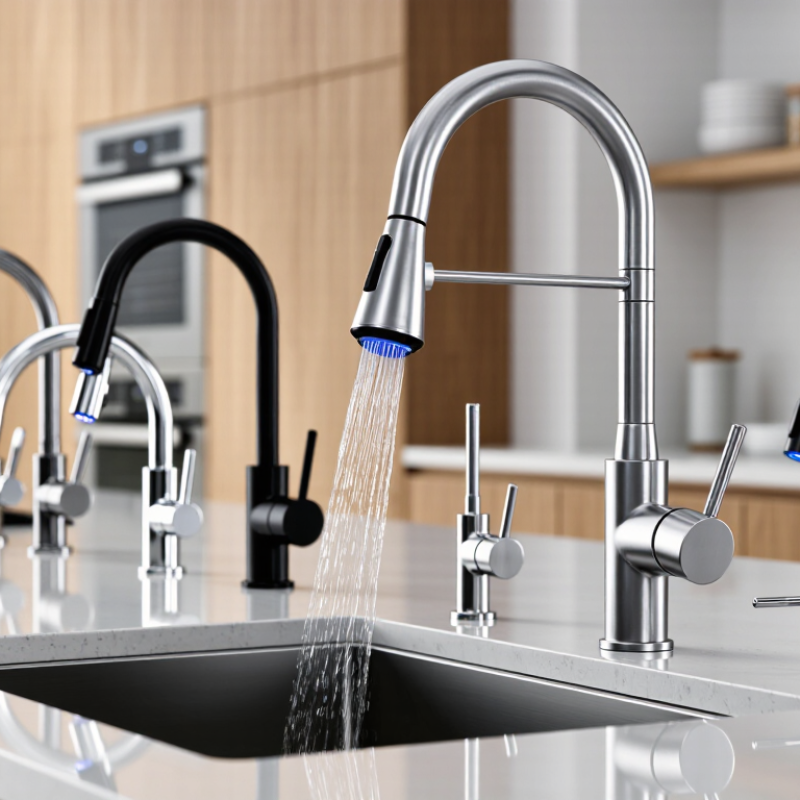
A reliable Sensor Kitchen Tap supplier proves performance beyond polished product photos. In real kitchens, hands are wet, lighting changes, and pots may block the sensor. The supplier should provide test data for detection range, response time, valve durability, and water resistance. Ask for production samples before placing a large order. Use them daily.
Professional suppliers explain the technical details clearly. They should offer stable specifications, installation drawings, material information, and consistent spare parts. Manufacturing records also matter. Batch numbers, inspection reports, and traceable component sources help buyers investigate faults quickly.
A dependable supplier will discuss battery life, power options, cleaning methods, and compatibility with common water connections. Clear answers build confidence.
Experience is often visible in small details. A strong supplier checks thread accuracy, hose flexibility, sensor alignment, and packaging protection. The carton should keep the tap from moving during long transport. After-sales support must include practical troubleshooting, not vague promises. However, no supplier is perfect. I have seen impressive samples followed by uneven production. That risk requires pre-shipment inspection and agreed quality standards. Response speed matters too. Delayed replies can become costly when installation schedules change. A reliable partner accepts questions, records complaints, and improves the next batch. Metrics matter. Claims do not.
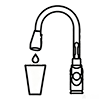
A sensor kitchen faucet detects hand movement with an infrared emitter and receiver near the spout. When a hand interrupts the invisible beam, the control valve opens electronically. Remove the hand, and the valve closes after a short delay.
It feels simple. Inside, timing matters.
Modern units typically use a solenoid valve, control circuit, battery pack, and manual override. A Sensor Lavatory Faucet uses the same basic principle, although kitchen models often need a wider detection range.
According to the U.S. Environmental Protection Agency’s WaterSense program, efficient faucets use no more than 1.5 gallons per minute, compared with the 2.2 gallons-per-minute federal standard. That difference can reduce faucet flow by about 30 percent.
Installation quality affects real performance. A dirty sensor window may cause delayed activation. Strong sunlight can also create false signals in poorly designed units.
Supplier testing should include wet hands, dark gloves, reflective cookware, and repeated cycles. Useful checks include response time, battery life, valve noise, and manual-control reliability.
Grand View Research identifies growing demand for smart water fixtures, but market growth does not guarantee dependable hardware. That deserves scrutiny. A lower purchase price may hide frequent battery changes or difficult replacement parts. Global buyers should request test records, flow-rate evidence, and clear maintenance instructions before choosing a supplier.
Global buyers should compare sensor kitchen faucet suppliers through measurable product features, not polished catalogs. Activation distance, response time, and shutoff delay affect daily comfort. Ask for laboratory test results under low water pressure. A sensor that works perfectly at 0.3 MPa may struggle in older buildings. That detail is easy to miss.
Water efficiency deserves careful comparison. The U.S. Environmental Protection Agency’s WaterSense specification limits bathroom faucet flow to 1.5 gallons per minute, compared with the common 2.2-gallon standard. Similar restraint can reduce kitchen water waste, but buyers should confirm actual flow performance. Look for aerator quality, splash control, and stable temperature. Fast response matters. So does quiet operation. WHO and UNICEF’s 2023 Joint Monitoring Programme reported that about 2 billion people lacked basic handwashing facilities at home in 2022. Hygienic, touch-free operation therefore has practical value in many markets.
Electrical design separates reliable suppliers from risky choices. Compare battery life, backup operation, waterproof protection, and replacement access. Request ingress-protection test evidence, valve-cycle testing, and spare-part availability. Temperature limiting can reduce scalding risks, especially in shared facilities. Stainless steel construction may support durability, but material certificates should confirm the grade. A cheaper faucet can become expensive when sensors, solenoid valves, or controllers are unavailable. I would also compare warranty terms by region. A long warranty sounds reassuring, yet weak local service can still disappoint. Supplier claims need verification.
Global buyers often compare sensor kitchen faucet suppliers by region before reviewing individual factories. East Asian manufacturing centers offer strong electronics integration, automated machining, and large-scale stainless steel production. These regions commonly support customized Sensor Tap Basin designs, touchless controls, and stable component sourcing. Factory visits can reveal more than a polished catalog.
Central European suppliers are known for precise engineering, water-efficiency testing, and strict production documentation. Their strengths often include durable valves, accurate infrared sensors, and consistent surface finishing. South Asian manufacturing hubs may provide flexible order quantities and competitive labor costs. However, quality can vary between workshops, even within the same industrial area. That is where careful auditing matters. I have seen attractive samples fail during repeated activation tests, so one inspection is never enough.
Tips: Ask for cycle-test records, sensor response data, material certificates, and spare-part plans. Request samples from current production, not specially prepared units. Check whether the supplier can maintain water pressure performance after months of use. Packaging also deserves attention; loose sensor modules can arrive damaged despite excellent factory workmanship. A reliable supplier should explain weaknesses clearly, not promise perfection.
Top Sensor Kitchen Faucet Suppliers for Global Buyers?
For global buyers, supplier evaluation should begin with documented quality controls, not attractive product photos. A reliable supplier should explain how each Basin Tap Sensor is assembled, tested, and packed. Ask for inspection records covering water leakage, sensor response, battery life, and repeated activation. Small details matter. A loose cable or uneven seal can cause failures after installation.
Compliance documents must match the destination market and product configuration. Request valid test reports for electrical safety, electromagnetic compatibility, materials, and water-contact components. Check the issuing laboratory, test standard, report date, and model number. Certifications should not be copied across similar products without verification. A supplier should also provide declarations, installation instructions, warranty terms, and traceability information. These documents help customs teams, distributors, and installers work with fewer surprises.
During factory communication, ask for a sample from normal production, not a specially prepared unit. Compare its sensor range, response time, spray function, and finish with the approved sample. I have found that packaging is often overlooked. Yet a damaged cartridge or scratched surface can create costly claims. A certificate alone is not enough. Production consistency still needs checking. Even experienced buyers can miss changing components, especially when suppliers use subcontractors. Require notification before material, software, or component changes. Keep written approval records for every revision.
| Supplier Profile | Typical Product Capability | Recommended Quality Evidence | Key Technical Standards and Certifications | Water-Contact and Material Requirements | Sensor and Electrical Compliance | Global Buyer Verification Checklist | Best-Fit Purchasing Use |
|---|---|---|---|---|---|---|---|
| OEM/ODM Faucet Manufacturer | Complete sensor kitchen faucets with body, cartridge, solenoid valve, control module, batteries or AC adapter, hoses, and mounting hardware. Usually supports private-label packaging and customized finishes. | ISO 9001 certificate Incoming inspection Leak testing End-of-line function test | ASME A112.18.1/CSA B125.1 for plumbing supply fittings where applicable; NSF/ANSI/CAN 372 for lead content in drinking-water system components for relevant North American markets; market-specific potable-water approvals. | Lead-restricted brass or stainless-steel wetted parts; documented alloy composition; corrosion-resistant fasteners; food-contact or potable-water documentation where required by the destination market. | IEC 60529 ingress-protection testing when an IP rating is claimed; EMC evaluation for electronic controls; electrical safety testing for mains-powered models; battery-compartment safety review for battery-operated models. | Verify current certificates, certificate scope, model numbers, test reports, material declarations, production samples, spare-part availability, and traceability from finished product to batch. | Retail programs, e-commerce products, hospitality projects, and customized private-label collections requiring broad product integration. |
| Commercial Washroom and Touchless-Systems Supplier | Sensor-operated faucets designed for frequent use in public facilities, healthcare environments, food-service areas, airports, and commercial buildings. Often provides control-box, solenoid, and service solutions. | High-cycle testing Flow-rate verification Fail-safe testing Service documentation | Plumbing fitting compliance to the destination market; applicable accessibility requirements; water-efficiency labeling or performance requirements; hygiene-related documentation for healthcare or food-service installations. | Verification of wetted materials, elastomer compatibility, scale resistance, thermal-shock performance, and cleaning-chemical resistance. Legionella-control requirements may apply to the complete installation and operating procedure. | Sensor response and shut-off testing; EMC and electrical-safety evaluation; protection against moisture ingress; documented operating temperature, sensing range, and standby power consumption. | Request duty-cycle data, replacement-valve specifications, sensor calibration procedure, manual override information, cleaning instructions, warranty terms, and local service capability. | Commercial projects where durability, hygiene, controlled water consumption, and predictable maintenance are more important than the lowest unit price. |
| Stainless-Steel and Premium-Material Specialist | Sensor kitchen faucets using stainless steel or other premium exterior materials, with emphasis on corrosion resistance, finish durability, concealed electronics, and long-term appearance. | Material certificates Salt-spray testing Coating inspection Dimensional control | Applicable plumbing-fitting standards; destination-market potable-water requirements; coating or surface-finish test methods specified in the buyer’s technical file. | Confirm stainless-steel grade, surface treatment, galvanic-corrosion controls, elastomer declarations, and absence of restricted substances required by the target market. | Validate sensor-module sealing, connector protection, cable routing, battery life, electromagnetic compatibility, and safe operation near sinks and splash zones. | Match the certificate and test report to the exact material grade, finish, component revision, and production site. Inspect color consistency and surface defects using approved samples. | Premium residential projects, designer kitchens, coastal regions, and installations exposed to humidity or aggressive cleaning chemicals. |
| Water-Efficiency-Focused Supplier | Sensor faucets engineered around automatic shut-off, aerators, flow restrictors, low-flow operation, and water-consumption control. | Flow-rate reports Activation testing Shut-off accuracy Water-use documentation | Applicable plumbing-performance standards; regional water-efficiency labeling or certification programs; ASME A112.18.1/CSA B125.1 where applicable to North American plumbing fittings. | Confirm that aerators, cartridges, valves, and hoses maintain stable performance at the stated pressure and temperature range without compromising potable-water safety. | Verify sensor activation distance, response time, timeout setting, false-trigger resistance, battery or adapter specifications, and behavior during power loss. | Compare independently measured flow rate with the product specification; request test conditions, pressure range, temperature range, and tolerances rather than relying only on marketing claims. | Green-building projects, water-restricted regions, public facilities, and buyers seeking measurable reductions in unnecessary water use. |
| EU/EEA-Oriented Export Supplier | Sensor kitchen faucets configured for European plumbing connections, documentation practices, packaging rules, and electronic-product market access. | Technical file Declaration of conformity Risk assessment Traceability records | CE-related conformity assessment for applicable electrical or electronic aspects; RoHS requirements for restricted substances; REACH-related substance information; potable-water requirements of the importing country; EN standards where identified in the technical file. | Confirm material declarations, supplier substance information, drinking-water contact compliance, packaging obligations, and country-specific requirements for components that contact potable water. | EMC and low-voltage safety assessment where applicable; battery and waste-battery obligations; IP testing only when an IP rating is stated and supported by a report. | Check that the declaration covers the exact model, electrical configuration, firmware version where relevant, and responsible economic operator. Confirm user instructions in required languages. | Distribution in EU/EEA markets, European retail channels, and projects requiring structured technical documentation and product traceability. |
| North America-Oriented Plumbing Supplier | Sensor faucets configured for North American water connections, installation practices, plumbing approvals, and lead-content requirements. | Third-party listing Lead-content report Pressure testing Installation instructions | ASME A112.18.1/CSA B125.1 for plumbing supply fittings where applicable; NSF/ANSI/CAN 372 for lead content; NSF/ANSI/CAN 61 where the applicable product or jurisdiction requires drinking-water-system component evaluation; state or provincial requirements may also apply. | Verify wetted-part composition, weighted-average lead calculation where applicable, solder and flux controls, hose materials, and documentation for every water-contact component. | Confirm certification or testing for the exact power adapter, battery system, controller, and sensor assembly. Review electrical markings, installation method, and replacement-part compatibility. | Check model-specific listing records, certificate validity, permitted configurations, flow-rate data, warranty address, replacement cartridge availability, and compliance with the buyer’s state or provincial requirements. | Residential and commercial projects in the United States and Canada where plumbing approval and lead-content documentation are purchasing prerequisites. |
| Asia-Pacific Export Supplier | Export-oriented sensor faucet supplier offering multiple inlet configurations, voltage options, finish selections, and packaging formats for different national markets. | Factory audit Pre-shipment inspection AQL sampling Change control | Destination-country plumbing, electrical, EMC, water-efficiency, and potable-water requirements. Certification must be selected according to the importing market rather than the manufacturing location. | Request raw-material records, plating or coating-process controls, potable-water test reports, elastomer specifications, and confirmation that substitute materials require buyer approval. | Validate the correct voltage, plug, adapter, battery type, EMC documentation, moisture protection, and sensor performance after international shipping and storage. | Audit production capacity, subcontractor controls, critical-component approval, sample-to-mass-production consistency, packaging drop tests, and corrective-action records. | Multi-country sourcing programs, importers requiring flexible configurations, and buyers seeking diversified production with strong quality-control oversight. |
| Regional Distributor and Project Integrator | Local inventory, installation support, specification assistance, replacement parts, and coordination between faucet manufacturers, contractors, and building owners. | Local stock records Installer training Warranty process Project submittals | Compliance depends on the supplied model and destination market. The distributor should provide original certificates, declarations, installation manuals, and evidence that the supplied configuration matches the approved model. | Confirm storage conditions, replacement-part authenticity, batch traceability, water-contact documentation, and procedures for handling damaged or altered products. | Verify adapter and battery compatibility, commissioning procedure, sensor troubleshooting, firmware or controller replacement process, and electrical installation requirements. | Review local service-level agreements, response times, installer competence, warranty exclusions, spare-part stock, recall communication, and responsibility for compliance documentation. | Construction projects, government procurement, hospitality developments, and buyers that require local technical support and after-sales service. |
Note: Certification requirements vary by destination country, product configuration, power source, installation type, and intended use. Buyers should verify current certificates and test reports for the exact model, revision, manufacturing site, and target market before placing an order.
Global buyers should compare sensor kitchen faucet suppliers beyond the headline unit price. Entry-level models may cost less, but batteries, controllers, and spare sensors can raise the final budget. Request a complete quotation with packaging, testing, sample fees, tooling, and shipping terms. A practical comparison uses the landed cost, not the factory price alone.
Customization usually affects both price and production time. Buyers can request finishes, spout height, spray modes, logo placement, and power options. Each change should appear on a signed specification sheet. Ask for sample approval before mass production. A small mistake in sensor range can cause false activation near a busy sink. That detail is easy to overlook. It should not be.
Minimum order quantities vary by finish, electronics, and packaging. Standard models may accept smaller trial orders, while custom colors often require several hundred units. Negotiate a pilot order with clear quality limits and replacement terms. Confirm water-pressure testing, leak checks, sensor response, and carton protection. Suppliers should provide inspection records and realistic production dates. Overpromised schedules are a warning sign. However, buyers also need to review their own forecasts honestly. Ordering too much inventory can damage cash flow, even when the factory offers a lower price.
Selecting a sensor kitchen faucet supplier requires more than comparing unit prices. Start with your market’s water pressure, voltage, fitting standards, and preferred installation method. A faucet designed for a 220-volt commercial site may fail in a 110-volt residential kitchen. Request test reports, material declarations, ingress protection ratings, and certification documents before approving samples.
Water efficiency also affects market acceptance. The U.S. EPA’s 2023 WaterSense Accomplishments Report states that labeled products have saved over 7.5 trillion gallons of water since 2006. Ask suppliers for verified flow-rate data, not promotional claims. Confirm whether the sensor works under weak pressure, bright sunlight, and wet hands. Test the shutoff delay. Small details matter.
Check the supplier’s production history, quality-control records, spare-part availability, and response time. A reliable partner should explain failure rates, battery life, cartridge performance, and warranty procedures clearly. The supplier should also support local packaging and language requirements. Industry forecasts often show strong smart-home growth, but market reports can use different definitions and sampling methods. Data can mislead. Run a small pilot order, inspect ten random units, and record installation time, false activations, and customer feedback. A lower price is rarely lower after returns, replacements, and delayed projects.
A reliable supplier provides test data, stable specifications, installation drawings, and traceable production records. Claims alone are not enough.
Samples reveal sensor range, response time, water resistance, and daily usability. Request units from normal production. Samples can deceive.
Ask about battery life, power options, cleaning methods, water connections, valve durability, and replacement parts. Vague answers create avoidable problems.
Compare current samples with approved units. Review inspection reports, batch numbers, and component sources. One inspection may miss uneven production.
Check thread accuracy, hose flexibility, sensor alignment, seals, finish, and packaging protection. Small faults can cause installation delays.
Request relevant safety, electromagnetic compatibility, material, and water-contact test reports. Confirm the laboratory, standard, date, and model number.
Loose sensor modules, cartridges, or hoses may suffer damage during transport. Strong cartons should prevent movement and surface scratches.
Support should provide practical troubleshooting, complaint records, spare parts, and response targets. Fast replies matter when installation schedules change.
Require written notice before material, software, or component changes. Keep approval records and repeat key tests after revisions.
No. Different regions offer different strengths, but workshop quality still varies. Audit carefully, and avoid trusting location alone.
Choosing the right Sensor Kitchen Faucet supplier requires more than comparing prices. Reliable suppliers should demonstrate stable manufacturing capabilities, consistent product quality, responsive communication, and experience serving international markets. Buyers should understand how sensor activation, power systems, water flow control, and safety features work before evaluating products. Important comparisons include detection accuracy, response time, battery or power options, material durability, installation compatibility, water-saving performance, and ease of maintenance.
Global buyers should also review supplier locations, production capacity, quality control procedures, and relevant certifications for their target markets. Pricing should be assessed alongside customization options, packaging services, lead times, warranty support, and minimum order quantities. A suitable supplier can provide clear technical documentation, samples, transparent quotations, and dependable after-sales assistance. By matching product features and compliance standards with local consumer needs, purchasing volumes, and distribution plans, buyers can reduce sourcing risks and build a more reliable long-term supply strategy.